
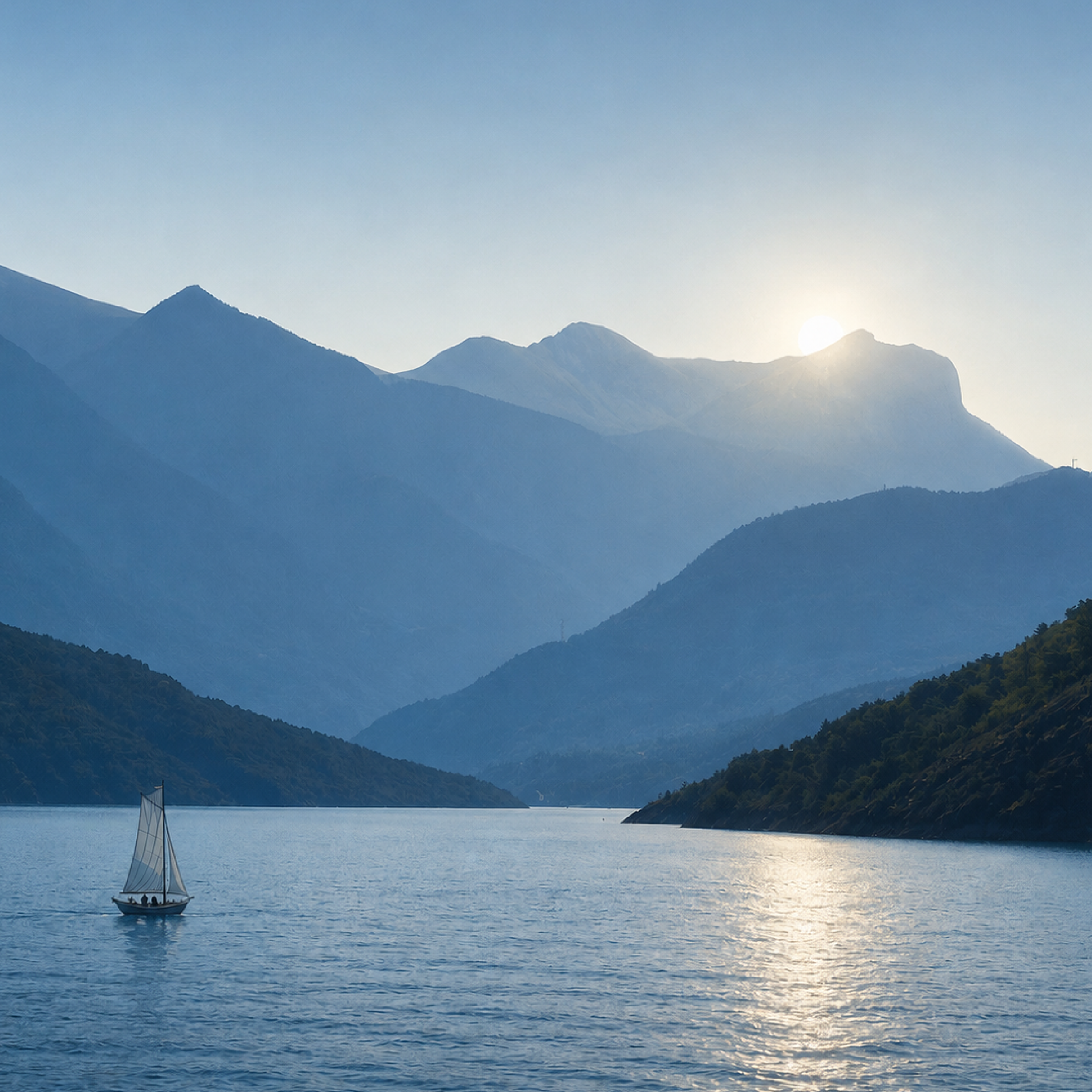
Serre-Ponçon
Electronica / Downtempo / Lo-Fi
July 2026 - Instrumental
Serre-Ponçon is Ubaye's third album, named after the lake in the French Alps where the artist regularly retreats — a genuine haven of peace for him. Fittingly, the album's very name is a homecoming twice over: the lake sits beside the Ubaye valley, the source of the artist's own stage name. If Komorebi was a trip abroad and Rayol a childhood memory, this record is where the artist actually goes to rest, and it sounds like it.
It opens outdoors and unguarded. Camping sauvage sets a bright, open-air tone, and Téléphone maison pulls right back into something quieter and warmer — calling home, in more ways than one. Grand Morgon stays soft and mellow, before Hanami brings a burst of light back in, the brightest, most delicate moment early on — and a quiet nod back to Komorebi's Japanese thread. Maternité stands out as the most personal title on the record, and it moves with more forward motion than anything before it, as if the subject itself carries its own momentum.
Train de nuit settles back into something slower and more contemplative, setting up the album's real high point: Mirage and Mustang arrive back to back as the loudest, most driven stretch of the record — genuine bursts of speed and intensity in an otherwise unhurried album. Granite immediately grounds things again, calm and solid, and Durance — named for the river that actually feeds the Serre-Ponçon lake — flows through in a warmer, steadier register, tying the album directly back to its titular place.
Latitude and Viaduc continue in that same measured, mid-paced vein, journeys rather than destinations, before Sequana — named for the goddess of the Seine — becomes the record's brightest, most alive moment, a real spark of energy late in the tracklist. Alpine follows as the shortest track on the album, a brief, elevated interlude, true to its name. Flamboyance and Givré pull the temperature back down, the latter the coolest, most hushed point on the whole record — genuinely frosted, as its title promises. The album closes on Louvre, warmer and a touch livelier again, ending not on total stillness but on something open and unresolved, like a last look back before the retreat ends.
Where Rayol — the second album — drifted through a remembered summer, Serre-Ponçon feels more like an actual retreat taken in real time — grounded, mineral, closer to mountain and water than to city or coast. It doesn't build to one dramatic peak so much as return to calm again and again, with Mirage/Mustang and Sequana as its two brief moments of real intensity in an otherwise restful record.
Tracklisting:
1 - Camping sauvage
2 - Téléphone maison
3 - Grand Morgon
4 - Hanami
5 - Maternité
6 - Train de nuit
7 - Mirage
8 - Mustang
9 - Granite
10 - Durance
11 - Latitude
12 - Viaduc
13 - Sequana
14 - Alpine
15 - Flamboyance
16 - Givré
17 - Louvre
Album cover: composite image of the Ubaye Valley and Lake Serre-Ponçon, based on serveral photographs
“The lake sits right next to the valley that gave me my stage name, so making an album there felt like an obvious thing I’d been putting off for too long. It’s the place I go when I’ve got nothing left to prove to anyone, and I think you can hear that.”